
Letting people see your words brings a certain fear. Not the everyday sort, like the missed deadline, the awkward sentence, but something far more exposing. The fear that asks. What if they see too much?
Years passed before I shared any writing publicly, still carrying that fear. Because my story wasn’t just a story. It was a loss.
In the early 1990s, I experienced the heartbreak that reshapes a life: the loss of my baby. It was difficult to find places to speak about it openly at the time. Grief, especially that kind of grief, lived behind closed doors in my community. People acknowledged it in hushed tones and harsh ones, and I would endure.
The silence heals nothing. It settles and then grows.
I became adept at bearing that loss for a long time, often seeming fine, progressing, and acting as expected. And yet, underneath the story remained unfinished. Not because I didn’t know how it ended, but because I had never told it.
It wasn’t until the early 2000s, when I joined a writing class, that something shifted. I didn’t arrive intending to write about my loss. In fact, I avoided it at first. I wrote around it: small observations, safer memories, anything that didn’t feel too close to the bone.
But writing has a way of gently circling back to the truth.
One day, almost without planning to, I wrote about my baby. Not in grand, sweeping sentences, but in fragments. Moments. Feelings I’d long tucked away. I remember how difficult it was to keep going, how every line felt like stepping onto uncertain ground. And yet, there was also something else: a seed of growth, an emotion. Relief and or recognition.
Still, writing it was one thing. Sharing it was another.
The first time I read those words aloud, my stomach had knots on gnarly knots, and my voice trembled. There is a vulnerability in speaking of grief that feels almost physical, as though you are handing a fragile child to a room full of strangers and hoping they look upon it as precious as you do.
But something unexpected happened.
The room didn’t turn away; there was an attentive silence. A different silence to the one I was used to. This wasn’t an avoidance.
And afterwards, people spoke to me. Not with platitudes or calm reassurances, but with honesty. Some shared their own stories. Others thanked me for sharing mine. However, not everyone liked my short story.
It was the first time I understood that telling my story wasn’t only about me.
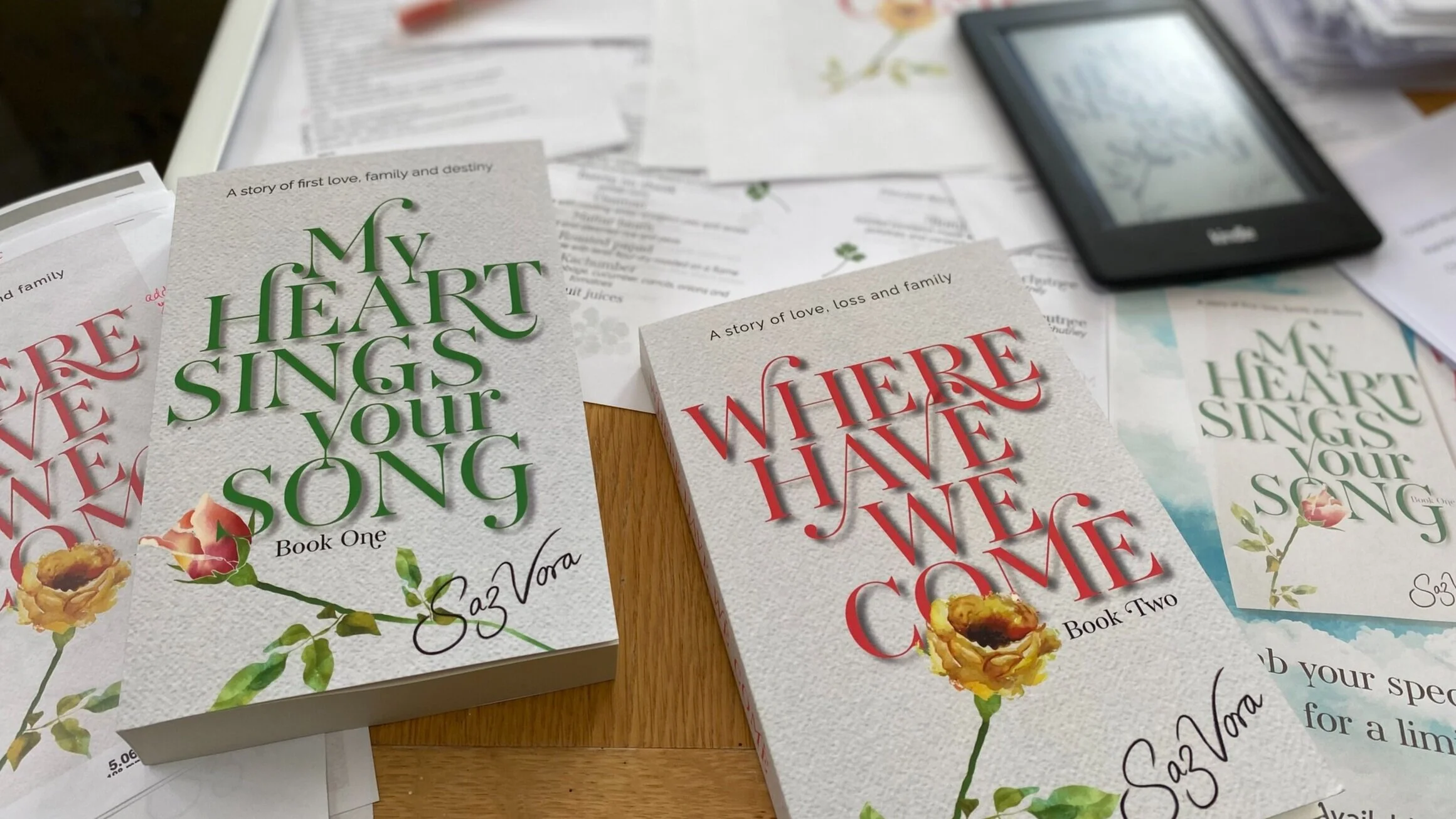
Years later, that realisation stayed with me when I decided to self-publish my work. By then, I knew that writing about baby loss wasn’t just an act of remembrance; it was an act of awareness and healing. I’d met too many people who carried this kind of grief quietly, believing they were alone or that their loss was unspeakable.
I wanted to challenge that silence.
Self-publishing felt like another leap into the unknown, but a necessary one. If sharing my story in a small room could create connection, then perhaps sharing it more widely could do even more. Not to reopen wounds, but to acknowledge them. To say that this happened, it matters, and it deserves to be spoken about.
And yet, even now, I am reminded that grief is not something we leave behind.
Becoming a grandmother has brought a new joy into my life, one that is profound. Along with the happiness, something else has reappeared. Memories. Fears I believed had long settled.
The experience of my child entering parenthood has, in unanticipated ways, returned me to my personal beginnings as a mother. The one that ended in a loss. There is a protectiveness that rises, almost instinctively. A sense of how fragile those early days can be. A reminder of how quickly everything can change.
It is a strange coexistence, holding both joy and fear in the same breath.
But perhaps that sharing of my work has taught me: that life does not divide itself neatly into before and after. That grief and love sit side by side. And that telling our stories, even the painful ones, allows us to carry them with a little more light.
The first time I shared my work publicly, I thought I was risking everything.
In truth, it was the start of finding my voice, not just as a writer, but as someone willing to say. This is my story, and it matters.